

Get in Touch Today
Discover how our copper solutions can enhance your business operations and drive success.
Copper Industry
5 min read
👁️ 2133 views

November 11, 2025
Table of Contents
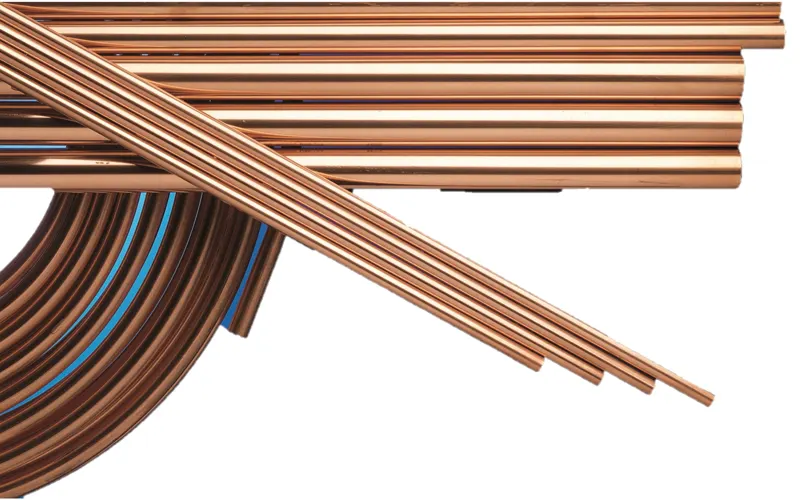
Copper tubing is the backbone of modern refrigeration and air-conditioning systems, carrying refrigerant with precision, stability, and unmatched thermal efficiency. According to industry estimates, more than 85% of global HVAC units rely on copper lines because they combine durability, safety, and optimal heat transfer in a way few other materials can match. From residential split units to large industrial chillers, copper provides the conductivity, pressure strength, and corrosion resistance needed to keep systems running efficiently for years. In this article, we explore the Copper tube used in refrigeration system, explain the most common types.
Copper has been the dominant material in refrigeration lines for decades because it offers the ideal balance of strength, reliability, and thermodynamic performance. Its ability to handle high pressures, extreme temperature fluctuations, and various refrigerants makes it the top choice across both residential and industrial cooling applications. Understanding what type of copper tubing is used for refrigeration starts with recognizing the material properties that give copper a unique technical advantage.
Here are key Technical Advantages of Copper in Refrigeration:
Copper transfers heat faster and more efficiently than aluminum or steel. This allows refrigerant to absorb and release heat with minimal loss, improving cooling capacity and reducing energy consumption in HVAC systems.
Copper naturally withstands chemical reactions and environmental contaminants. This helps prevent leaks, premature failure, and system contamination, ensuring stable performance even in harsh industrial conditions.
Copper tubes are the backbone of efficient refrigeration systems, including air conditioning units, due to their superior thermal conductivity, corrosion resistance, and durability. To understand what type of copper is used for air conditioning and how it ensures optimal performance, check out our detailed guide here.
Copper can be easily bent and shaped without cracking, making installation faster and cleaner. This flexibility is especially valuable in tight mechanical rooms, residential installations, and complex commercial systems.
Choosing the correct copper tubing requires understanding the dimensional standards, wall thicknesses, and allowable working pressures for each category. These characteristics directly influence system reliability, refrigerant compatibility, and installation constraints. For HVAC technicians deciding on the best copper pipe for refrigeration, knowing exact PSI ratings and ASTM dimensions ensures safe and efficient system design. Below are the most widely used Copper tube used in refrigeration system options with their real engineering specs.
ACR tubing is manufactured according to ASTM B280, supplied nitrogen-charged, and used in all professional refrigeration installations. Its dimensions match Type L copper but pressure ratings differ based on size. For many professionals comparing what type of copper tubing is used for refrigeration, ACR is usually the first choice because of its cleanliness and high-pressure tolerance.
Common Dimensions & Specs:
1/8″ to 1–3/8″
1/4″ OD → 0.030 in
3/8″ OD → 0.032 in
1/2″ OD → 0.035 in
1/4″ OD → > 700 PSI at 100°F
3/8″ OD → > 650 PSI
1/2″ OD → > 635 PSI
Type L tubing, defined under ASTM B88, features medium wall thickness and is popular in residential HVAC and moderate-pressure refrigeration systems. Its balance of bendability and strength makes Type L suitable for most light commercial and domestic refrigeration installations.
Common Dimensions & Specs:
1/4″ to 2″
1/4″ OD → 0.030 in
3/8″ OD → 0.035 in
1/2″ OD → 0.040 in
1/4″ OD → ~650 PSI
3/8″ OD → ~625 PSI
1/2″ OD → ~601 PSI
Type K tubing is the thickest and strongest category defined by ASTM B88, making it ideal for high-pressure or underground refrigeration piping. Because of its strength, Type K is often used where system longevity and maximum leak resistance are essential; a key factor in why copper tubes used in refrigeration system engineering remain dominant.
Common Dimensions & Specs:
1/4″ to 2″
1/4″ OD → 0.035 in
3/8″ OD → 0.049 in
1/2″ OD → 0.049 in
1/4″ OD → ~900 PSI
3/8″ OD → ~850 PSI
1/2″ OD → ~808 PSI
Capillary tubes regulate refrigerant flow and create the required pressure drop before the evaporator. They follow ASTM B280 and come in micro-bore sizes. Because they must maintain exact flow rates, capillary tubes are manufactured with very tight dimensional tolerances.
Common Dimensions & Specs:
Copper tubing plays a critical role across every stage of the refrigeration cycle, from low-pressure evaporation to high-pressure discharge. Each application demands specific pressure ratings, wall thickness, and dimensional tolerances, which is why system designers carefully select the best copper pipe for refrigeration based on performance requirements.
The table below provides a full technical comparison of how different copper tube categories function within major refrigeration components; also offering engineers and technicians a clear reference for system design:
| Application | Typical Copper Types Used | Common OD Sizes | Wall Thickness Range | Working Pressure (PSI) | Refrigerants Used | Operating Temperature | Installation Notes |
| Line Sets (Low/High Side) | ACR, Type L | 1/4″, 3/8″, 1/2″, 5/8″, 3/4″ | 0.030″–0.040″ | 600–800 PSI | R22, R410A, R32 | -30°C to +120°C | Requires nitrogen purging; UV-resistant insulation needed |
| Condensers & Evaporators | ACR | 1/4″ to 1–1/8″ | 0.030″–0.035″ | 650–750 PSI | R410A, R134a, R290 | -40°C to +150°C | Internal cleanliness is critical; avoid creating oil traps |
| Heat Exchangers | Type L, Type K | 1/4″ to 2″ | 0.030″–0.049″ | 700–850 PSI | R717 (Ammonia), R404A | -50°C to +180°C | Requires heavy-duty brazing and corrosion-resistant coatings |
| Small Refrigeration Units | Capillary Tubes | 0.031″–0.125″ | 0.004″–0.010″ | Up to 1500 PSI | R600a, R134a, R1234yf | -20°C to +120°C | Extremely tight ID tolerances; length and diameter control are crucial |
Selecting the correct Copper tube used in refrigeration system depends on pressure, refrigerant behavior, installation layout, and cost constraints. These factors directly influence system reliability and long-term efficiency.
Each refrigerant has unique pressure characteristics and chemical compatibility requirements. High-pressure refrigerants like R410A require thicker walls, while hydrocarbons demand precise tubing cleanliness and dimensional accuracy.
The tube must safely withstand the system’s maximum PSI rating, including peak startup and temperature-driven pressure increases. Undersized tubing can lead to failures, reduced capacity, or catastrophic leaks.
Longer pipe runs introduce higher friction losses and may require larger diameters. Outdoor installations also need UV resistance, insulation integrity, and proper support spacing to prevent vibration damage.
While thicker tubing (such as Type K) offers higher durability, it increases material and installation costs. Contractors must balance performance needs with market availability and project budgets.
Advantages include:
Also as Limitations we must point out these:
Proper installation is essential for maximizing tube longevity, maintaining pressure integrity, and ensuring stable refrigerant flow throughout the system.
Here are some suitable Practices for installation:
Copper remains the trusted backbone of refrigeration engineering thanks to its unmatched conductivity, reliability, and pressure tolerance. Whether designing a residential AC system or an industrial chiller, understanding why copper tubes used in refrigeration system ensures better performance, fewer failures, and longer service life.
For engineers, contractors, and industrial buyers, ordering copper in any size; especially for refrigeration systems is simple: visit the Asteria website and submit your order directly on this page. Just call our team or click the orange “Send a Request” button at the bottom of the page, and our specialists will contact you promptly.
FAQ
ACR copper tubing is the industry standard because it is nitrogen-charged, oxidation-free, and rated for high-pressure refrigerants like R410A and R32.
Yes. Type K copper is the strongest and thickest copper category and is suitable for high-pressure and underground refrigeration applications, though it is more expensive and not always necessary.
ACR is nitrogen-charged for cleanliness and designed specifically for sealed refrigeration systems, whereas Type L is a more general plumbing/HVAC tubing with slightly different pressure ratings.
Copper offers higher thermal conductivity, better corrosion resistance, longer service life, and more reliable brazed joints compared to aluminum.
Latest News | Events

News
5 min read
3 months ago

News
5 min read
3 months ago

News
5 min read
4 months ago

News
5 min read
4 months ago

The Asteria Editorial Team
Copper Industry

https://asteriacopper.com/?p=635
Link copied


Get in Touch Today
Discover how our copper solutions can enhance your business operations and drive success.