

Get in Touch Today
Discover how our copper solutions can enhance your business operations and drive success.
Technical Guides &Tips
5 min read
👁️ 311 views

December 1, 2025
Table of Contents
Corrosion in copper tubes is a silent but serious issue that can compromise the performance and safety of plumbing, HVAC, and industrial systems. Although copper is naturally resistant to many environmental conditions, factors like water chemistry, temperature fluctuations, and improper installation can accelerate corrosion. When left untreated, this damage can lead to leaks, reduced efficiency, costly repairs, and even system failure. Understanding the root causes of copper tube corrosion is the first and most important step to prevent copper pipe issues. In this article by Asteria Copper Industries, we explore why corrosion occurs, the warning signs to watch for, and the most effective methods to protect copper systems for the long term.
Corrosion in copper tubes refers to the gradual deterioration of copper material due to chemical, physical, or environmental reactions. Understanding this issue is crucial because unresolved corrosion not only decreases the lifespan of industrial systems but also leads to leaks, contamination, pressure drops, and costly repairs. Many facility managers who fail to prevent copper tube damage often face operational downtime, reduced HVAC efficiency, and significant safety risks.
Below table is an overview of the primary types of copper tube corrosion, their characteristics, and their warning signs:
| Type of Corrosion | Description | Common Indicators |
| Pitting Corrosion | Localized attack creating small but deep pits. Common in cold-water plumbing. | Pin-sized holes, sudden leaks, blue-green stains |
| Uniform Corrosion | Even thinning of copper surface caused by chemical exposure. | Surface discoloration, reduced tube wall thickness |
| Erosion Corrosion | Caused by high-velocity fluids that physically wear the inner wall. | Grooves inside tubes, pressure loss |
| Galvanic Corrosion | Occurs when copper contacts dissimilar metals. | Accelerated corrosion at joints, weakened connections |
| Formicary Corrosion | Microscopic tunneling caused by organic acids. | Black streaks, mysterious refrigerant leaks |
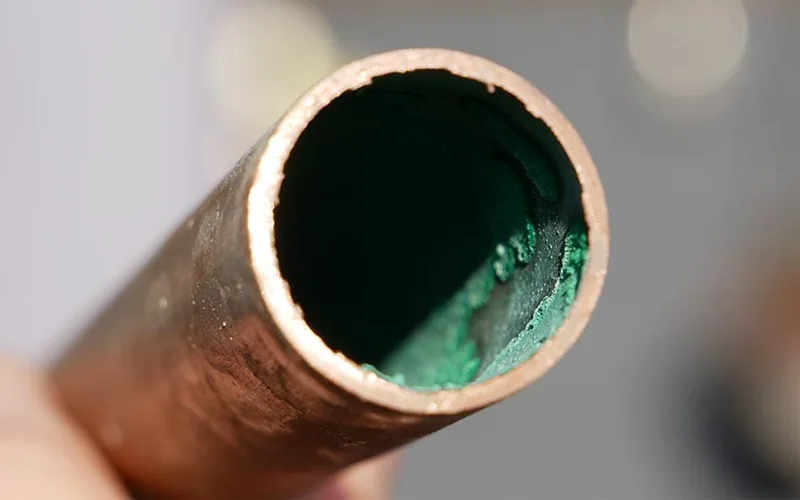
Green corrosion indicates oxidation and potential contamination, which can lead to long-term damage or system failure if left unaddressed. To avoid these outcomes, using high-quality materials such as the Asteria Copper Pancake Tube, Copper Straight Tube, and Copper Capillary Tube plays a significant role in reducing early corrosion and helping to prevent copper pipe damage in demanding industrial environments.
Corrosion in copper tubes can occur for multiple reasons, and each cause typically leads to a specific type of deterioration. Understanding what corrodes copper pipes allows engineers and maintenance personnel to take preventive action early and ensure safe operation. Whether you manage HVAC, industrial refrigeration, or high-pressure plumbing networks, knowing the root causes is essential if you want to prevent copper tube damage and avoid expensive repairs.
Below are the primary causes and the specific corrosion types they generate:
Poor water quality (high acidity, low pH, or high chloride content) is one of the leading contributors to pitting corrosion.
Cause → Pitting Corrosion
When water, refrigerant, or other industrial fluids move too quickly through copper tubes, the inner wall becomes eroded.
Cause → Erosion Corrosion
Using copper alongside steel, aluminum, or other incompatible metals creates galvanic reactions.
Cause → Galvanic Corrosion
Environments rich in VOCs (Volatile Organic Compounds) can cause microscopic damage known as formicary corrosion.
Cause → Formicary Corrosion
Stress, improper fittings, and contamination inside tubes contribute to both uniform and localized corrosion.
Cause → Mixed Corrosion Types
Yes—internal corrosion is common, especially when velocity, pH levels, or chemical contaminants exceed recommended levels. Understanding how to prevent copper pipe corrosion begins with identifying these internal factors and using corrosion-resistant products like Asteria Copper Straight Tube, which is engineered for durability in demanding environments.
Early identification of corrosion is the most critical step in maintaining industrial copper tubes and ensuring long-term system reliability. Many major failures in HVAC and refrigeration systems originate from small, undetected corrosion points that escalate over time. Understanding these early indicators helps engineers prevent copper pipe deterioration before performance, safety, or fluid quality is compromised.
Below are the most reliable, engineering-grade methods used to identify corrosion symptoms in their earliest stages.
One of the earliest visual cues is the formation of unusual surface colors. A copper tube that shifts toward brown, dark grey, or pale green may be developing a chemical imbalance on its surface. Green patina is particularly important because technicians often ask: Is green corrosion on copper pipes dangerous?
Yes; because it may indicate oxidation that can rapidly spread and begin affecting internal layers. Discoloration patterns, especially when patchy or ring-shaped, are a direct indicator that system chemistry or environmental exposure needs immediate assessment.
Pinhole leaks are strong evidence of early pitting corrosion. These tiny perforations often produce faint hissing sounds, micro-droplets, or localized damp spots. A drop in system pressure or unexplained refrigerant loss may signal internal deterioration; raising the question: Do copper pipes corrode inside?
Yes. Internal corrosion is common when water velocity, fluid acidity, or contaminants exceed optimal ranges. Using high-integrity materials like Asteria Copper Straight Tube can help prevent copper tube damage under high-pressure or high-flow conditions.
Black streaks forming along joints or bends typically indicate early formicary corrosion. This type of corrosion is extremely hard to detect without experience because it creates microscopic tunneling rather than visible pitting. Refrigeration systems are especially vulnerable, and unexplained cooling inefficiency may be the first operational symptom.
When copper begins to lose its smooth finish, flake away, or show a sandy texture, uniform corrosion is likely developing. This pattern often appears in industrial environments with acidic vapors or airborne contaminants. Using corrosion-resistant tubes such as Asteria Copper Pancake Tube in these environments significantly reduces the risk.
Chemical reactions inside the tube can release metallic-smelling vapors or leave reddish and blue-green deposits near fittings. This may indicate galvanic reactions or early joint degradation. These warning signs are crucial for planning maintenance schedules and executing prevent copper pipe procedures before leaks occur.
Detecting corrosion properly requires a structured engineering approach, because different corrosion types produce different early indicators. Before applying any corrective action, technicians must follow a systematic diagnostic sequence to avoid misinterpretation and ensure accurate assessment.
Early corrosion almost always presents visual anomalies that can be detected without special tools. These observations help narrow down the potential corrosion type before moving to deeper diagnostics.
Steps:
Corrosion often affects system efficiency long before structural failure becomes apparent. Performance-based diagnostics reveal internal problems that cannot be seen visually.
Steps:
Some corrosion types, such as formicary or internal pitting, are nearly invisible from the outside. Internal inspections provide clarity on the exact location and severity of deterioration.
Steps:
Because corrosion mechanisms are driven by fluid chemistry, accurate testing is essential for identifying the root cause. These tests determine whether contaminants or chemical imbalances contributed to the damage.
Steps:
Structural integrity is directly linked to tube wall thickness, making this a crucial stage in corrosion assessment. Thickness measurements reveal whether the tube can continue operating safely.
Steps:
Different corrosion types require distinct treatment strategies to prevent recurrence. At this stage, technicians match the identified corrosion pattern with the most effective prevention method.
Steps:
Adjust pH, velocity, or chemical conditions to disrupt corrosion mechanisms
Replace affected sections with corrosion-resistant options like Asteria Copper Straight Tube
Install dielectric unions, improve filtration, or reduce VOC exposure based on the corrosion category
This section provides non-repetitive, experience-based guidelines from real industrial specialists.
Here are Expert Notes; When Repair Is Possible:
Expert Notes; When Replacement Is Mandatory:
Deep pitting that has caused any form of micro-leak
Professional “Do and Don’t” Guidelines:
Copper tubes play an irreplaceable role in keeping HVAC, refrigeration, and industrial systems reliable. As we explored throughout this article, early detection, understanding corrosion mechanisms, and implementing preventive strategies are the key steps to ensuring longevity and safety. By choosing high-quality materials like Asteria Copper Pancake Tube, Straight Tube, and Capillary Tube, industrial facilities can significantly reduce corrosion risks and confidently prevent copper pipe degradation.
If you are looking to upgrade, replace, or inspect your copper systems, you can easily place your order directly on the Asteria website. Simply call our support team or click the orange Send a Request button at the bottom of this page so our specialists can assist you.
Frequently Asked Questions – FAQs
FAQ
By maintaining balanced water chemistry, controlling velocity, avoiding dissimilar metal contact, improving ventilation, and using high-quality tubes such as those produced by Asteria.
Corrosion can result from acidic water, high chloride levels, galvanic reactions, organic acids, and improper installation conditions.
Minimize exposure to moisture, reduce airborne chemicals, and apply protective coatings when appropriate.
Yes. Green corrosion indicates oxidation that can progress into structural damage or internal corrosion if left untreated.
Yes, especially in systems with improper pH, high oxygen content, or excessive fluid velocity.
Use corrosion-resistant copper products, monitor water quality, and perform regular inspections to maintain long-term system integrity.
Latest News | Events

News
5 min read
3 months ago

News
5 min read
4 months ago

News
5 min read
4 months ago
News
5 min read
5 months ago

The Asteria Editorial Team
Technical Guides &Tips

https://asteriacopper.com/?p=782
Link copied


Get in Touch Today
Discover how our copper solutions can enhance your business operations and drive success.